The Spectrum of Boundaries: From Non-Existent to a Freaking Wall!
Part 2 of a 4 part series all about Boundaries!
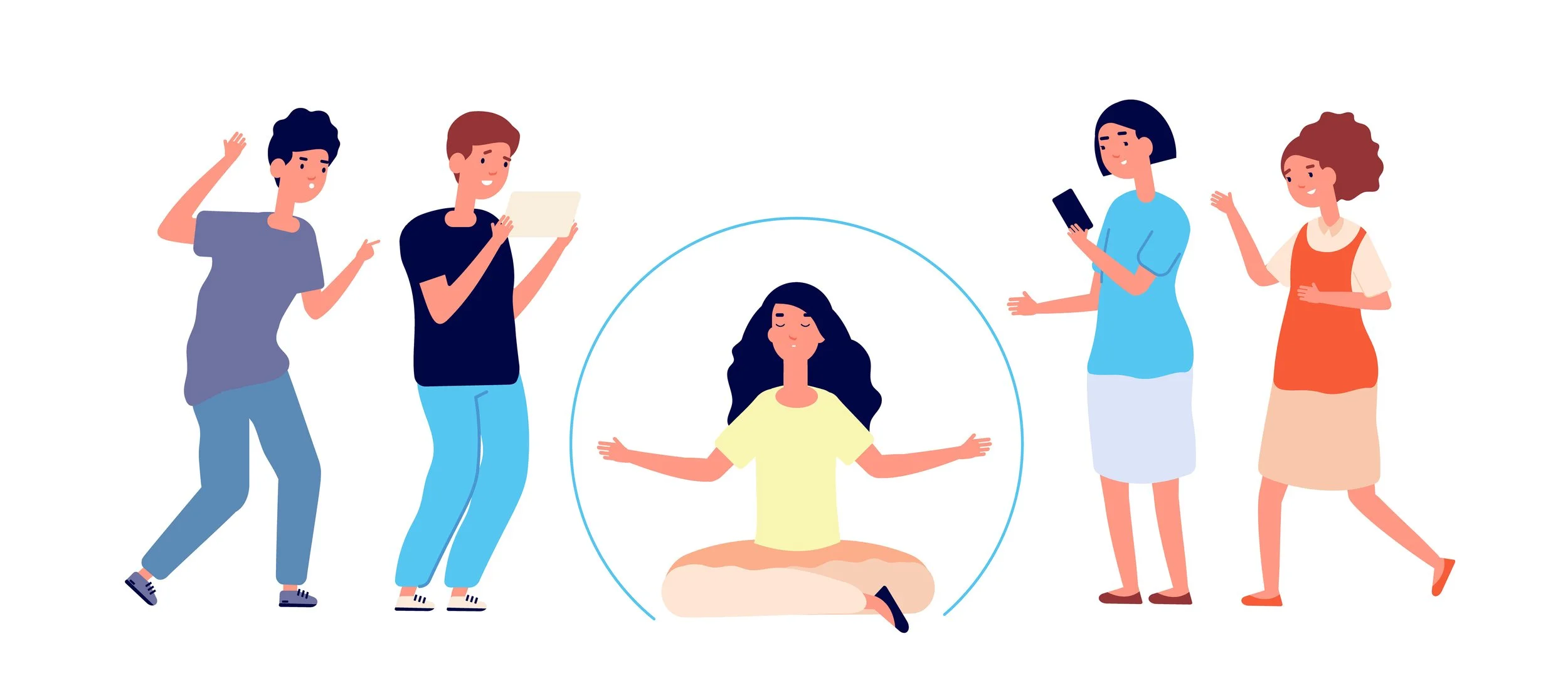
If the thought of setting a boundary makes your heart race or your stomach do a flip, you are not alone. Most of us avoid boundaries not because we don't want them, but because we’re afraid of the friction they might cause.
Welcome to Part 2 of our series! Today, we’re tackling that fear head-on. I’m going to show you that setting a boundary isn't a confrontation, it's a conversation. We’ll look at how to stay calm and clear while protecting your time, your space, and your peace.
Part 2: Not a one-size-fits-all concept
Boundaries exist on a spectrum, and understanding where you (and others) fall can illuminate why certain interactions play out the way they do.

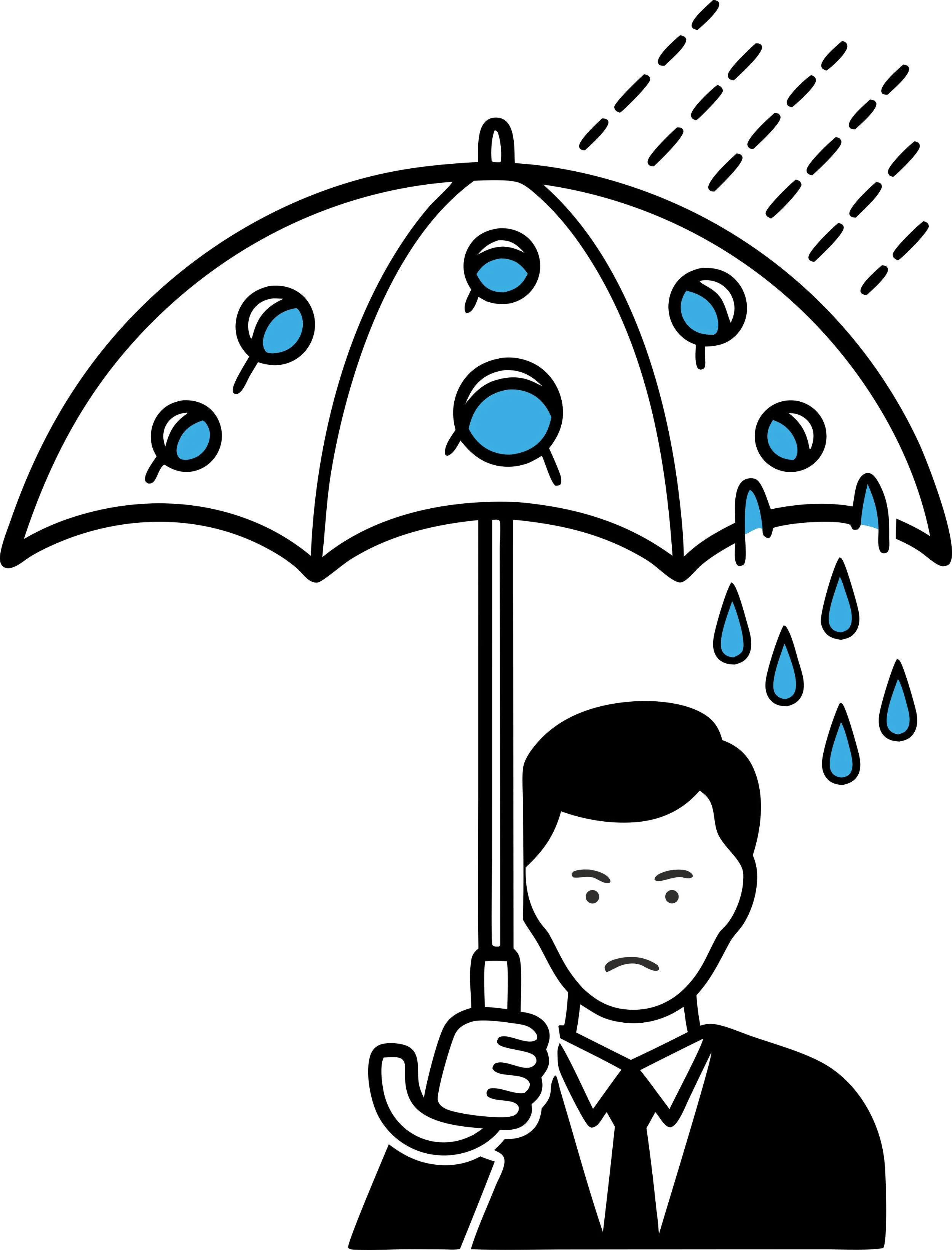

Non-Existent Boundaries: Occur when there is no functional "filter" or "line" between your needs and the needs of others. It is the state of being completely accessible, and reactive to the environment around you at the expense of your own well-being.
Example: An employee who constantly works late, checks emails at all hours, takes on every extra task, and never says no, leading to burnout and resentment. (Types of Boundaries: Time, intellectual, mental )
(Pro Tip: If you are feeling resentful, you need to ask yourself, what boundaries do I need to improve?)
2. Porous Boundaries: These are weak and easily crossed, often leading to people-pleasing.
The Boundary: Failing to set limits on when and how people can reach you, leading to a total loss of "off" time.
Example: You tell your team you are "off the clock" for your child’s birthday, but you continue to reply to "quick" Slacks and emails throughout the party. You feel resentful toward your job for "interrupting," even though you were the one who opened the app.
Why it's Porous: The boundary was stated verbally, but the action was weak. You allowed the "digital wall" to be crossed easily, signaling to others that your "no" actually means "maybe."
(Note: If you have porous boundaries, you might find yourself consistently justifying others behavior, telling yourself "just this one time," saying “well, I already asked them”, or avoiding uncomfortable conversations all together)
(A look ahead: Remember this example in part 3 of this series where we talk about boundary myths. “Boundaries are not what we ask of others, that is a request, boundaries are what we do.”)
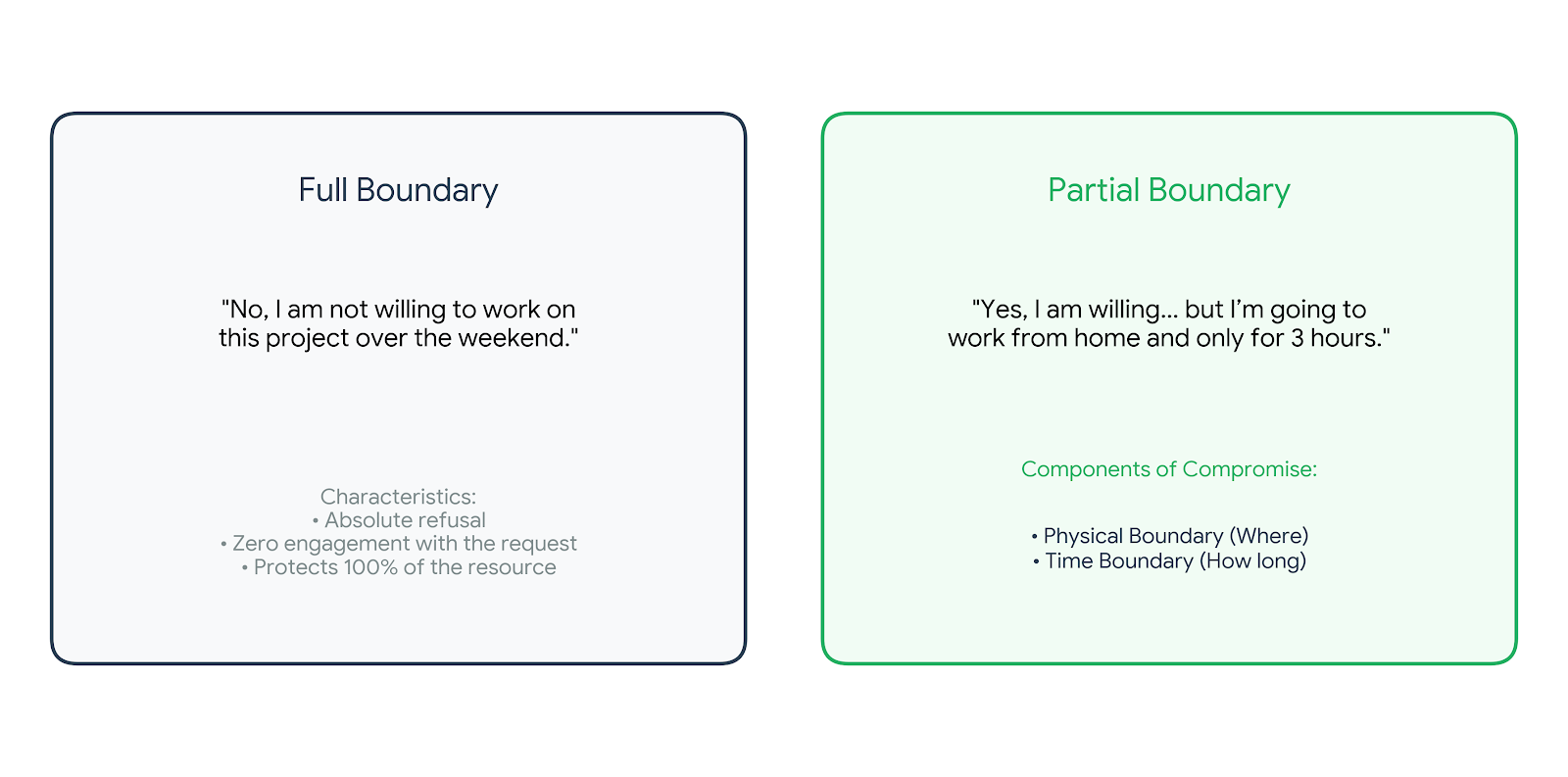
3. Partial Boundaries (The "Yes, but..." or "No, but..." technique):
These are boundaries that leave room for negotiation or compromise. Sometimes our boundaries aren’t a hard "no" and require more information.
Example: When asked to take on an urgent project on a Friday afternoon, responding with, "Yes, I can start on that, but I'll need to push back the deadline for project X until next week," or "No, I can't take that on right now, but I can help you find someone who can."
4. Rigid Boundaries: The Shield of Protection vs. the wall
Rigid boundaries are inflexible and rarely open to compromise. While the word "rigid" often has a negative connotation, it is important to recognize their vital role: Rigid boundaries are there to protect us from harm. They are the "non-negotiables" that keep our physical, emotional, and ethical safety intact.
However, context is everything. While a rigid boundary is a successful shield, it can also become a wall. (Sometimes we want that wall, sometimes we don’t).
The Strength: They provide absolute clarity. In environments that are toxic, unsafe, or highly compromised, a rigid boundary is your most effective tool for survival and self-preservation.
The Risk: If used as a "default" in healthy relationships, rigid boundaries can lead to isolation. Because they leave little room for the "give and take" of human connection, they can accidentally shut out the very people we want to grow with.
(Pro tip: rigidity is a tool for protection, not a permanent lifestyle. I like to think of rigid boundaries as an "emergency exit”, essential for safety, but not necessarily where you want to live every day.)
Examples of rigid boundaries necessary for safety and protection
Refusal of Unwanted Touch:
The Boundary: A complete and immediate refusal of physical contact like hugs, pats on the back, or any unwanted physical touch. This is often communicated through action or a short, firm statement.
Example: A colleague attempts to give you a hug after a tough meeting. Your firm boundary is to take an immediate step back, maintain a neutral posture, and clearly state, "I would prefer not to hug."
Why it's Rigid/Healthy: This boundary is rigid because it is an absolute "no" and is non-negotiable, protecting personal space and preventing potentially inappropriate situations.
Maintaining Personal Space:
The Boundary: A clear standard that prohibits others from entering your personal workspace without invitation, leaning over you, or touching items on your desk.
Example: A manager frequently stands uncomfortably close or leans over your shoulder while you are working at your computer. Your rigid boundary is to immediately turn your body toward them or hold up a hand and say, "I need a bit more space to focus. Could you please stand back a little?" or, "I'd be happy to show you, but please don't touch my monitor."
Why it's Rigid/Healthy: This boundary protects your physical bubble, reduces distraction, and prevents intimidation or micro-management through physical presence.
Refusal to Work in Compromised Environments:
The Boundary: An absolute refusal to enter or work in a physical space that is unsafe, unsanitary, or risks your health or physical well-being.
Example: You are asked to enter an unfinished construction area without the required safety gear. Your firm boundary is to state, "I will not enter that area without the proper personal protective equipment. That is a safety violation."
Why it's Rigid/Healthy: This is a firm boundary tied to legal and ethical workplace safety standards, which are inherently non-negotiable.
(Note: A rigid/ protective boundary around physical touch or being spoken to in a disrespectful or degrading way is essential and healthy, as it protects your fundamental dignity and safety.)
Examples of rigid boundaries that create isolation
Total Emotional Withdrawal (The Wall):
The Boundary: An absolute refusal to discuss feelings, mistakes, or feedback, often characterized by "shutting down" or walking away without a plan to return to the conversation.
Example: A colleague or partner brings up a concern about a missed deadline or a hurt feeling. Your rigid response is to say, "I’m not talking about this." and immediately leaving the room or hanging up the phone.
Why it's Unhealthy/Rigid: This is a rigid boundary used as a defense mechanism to avoid discomfort. Unlike the safety example, this lacks the flexibility needed for healthy relationships. It doesn't protect a physical safety standard; instead, it prevents resolution, creates a "wall" that keeps people out, and eventually leads to isolation and resentment.
Inflexible Communication Mandates:
The Boundary: An absolute refusal to communicate outside of a hyper-specific, narrow window, regardless of the urgency or the impact on the team/relationship.
Example: You tell your team, "I do not acknowledge or read any communication that isn't sent via a formal email. If you Slack me or speak to me in the hallway about a project, I will ignore you." Even when a true emergency occurs that requires a 30-second verbal check-in, you stay silent to "enforce the rule."
Why it's Unhealthy/Rigid: While protecting your focus is good, this is unhealthy because it is punitive and inflexible. It prioritizes a "rule" over the actual goal of the relationship (collaboration and problem-solving). It lacks the nuance to distinguish between a "distraction" and a "necessity," eventually creating a culture of fear rather than a culture of respect.
(Note: It's about finding the healthy middle ground for you and the relationship in each specific situation.)
In Part 3, we’re peeling back the layers on what boundaries really are. We often avoid setting boundaries because we’ve bought into a few common myths. Let's look at what's actually true... because it’s much more powerful. We’re going to uncover how effective boundaries actually act as a bridge to deepen connection, not a wall to keep people out. If you’ve ever felt guilty for setting a limit, this one is for you.
