The most important thing I can teach you about boundaries
Part 3 of a 4 part series all about boundaries!
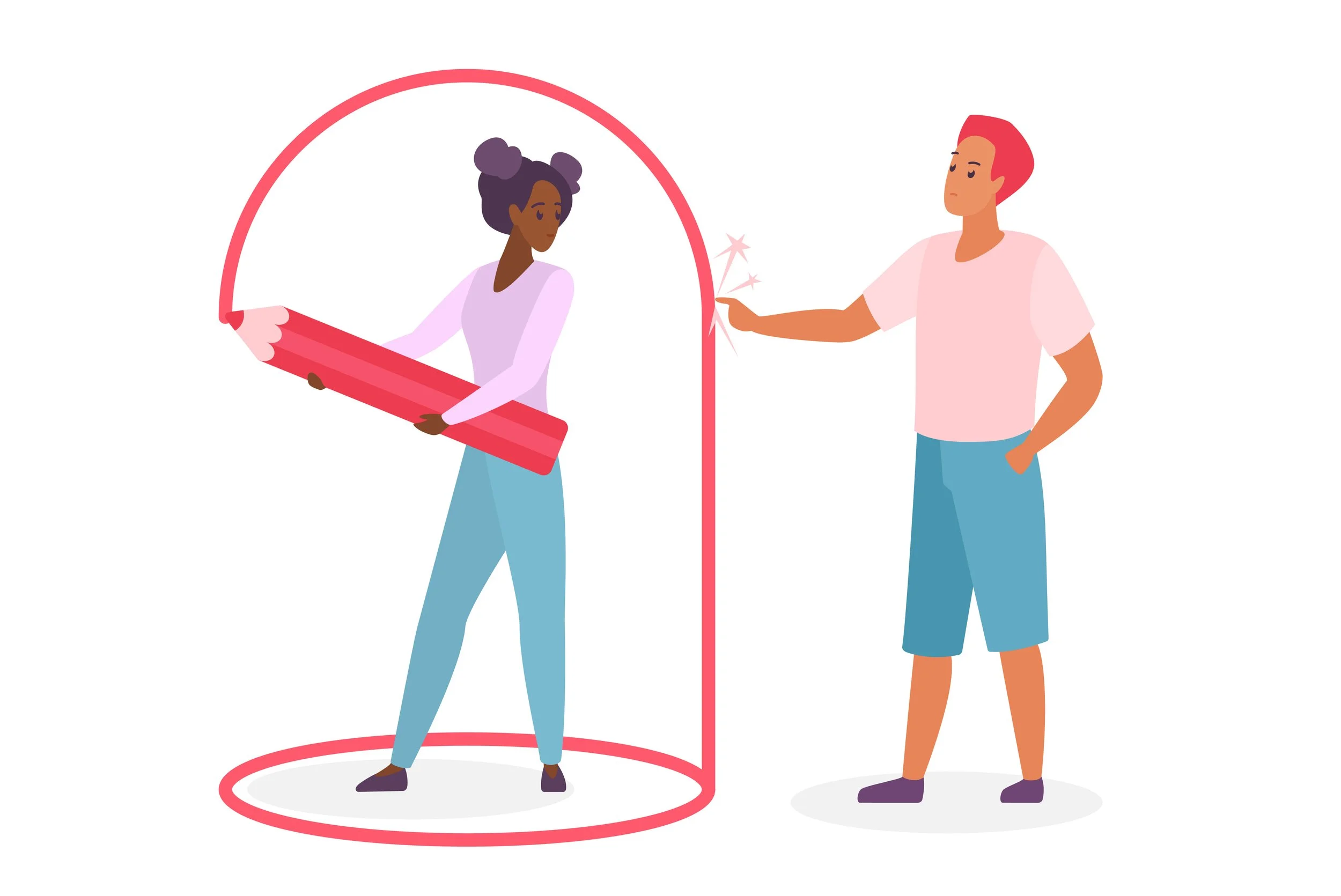
If you’ve ever felt that stomach dropping (EEEEKKK!) moment when you realize you actually need to follow through on a boundary, you aren’t alone.
In Parts 1 and 2, we laid the groundwork for identifying where you need more space and how to communicate those needs. But even with the best communication skills, we often find ourselves frustrated when others don't 'listen' or respect our words. This is where most people get stuck when it comes to boundaries.
As a coach and therapist, I see so many professionals burn out because they think a boundary is a request that someone else keeps ignoring. Today, I want to teach you the most crucial shift in understanding I can impart: a boundary isn't a favor you ask of someone else; it’s a commitment you make to yourself. We’re going to dive into the misconceptions that keep us stuck and explore how to use 'The Silent Language' of action to protect your time, energy, and focus.
Misconceptions:
The Silent Language: Boundaries Don't Always Have to Be Verbal
A common misconception about boundaries is that they are always verbal. This is simply not true. While sometimes we make our boundaries clear by explicitly communicating them to others, it's not always safe, appropriate, or even necessary. We might fear backlash, or it might just be more effective to communicate through our actions.
Example (Non-Verbal): You've clearly stated your working hours are 9-5. When a colleague emails you at 7 PM, you simply don't respond until 9 AM the next day. Your action (or inaction) reinforces your time boundary without needing to reiterate it verbally.
Example (Non-Verbal): A manager frequently drops by your desk for impromptu chats that disrupt your focus. You start putting on your noise-canceling headphones when you need to concentrate on a task, signaling a boundary around your mental focus without having to tell them to leave you alone.
Please note: This is not a license for passive-aggressive behavior. Non-verbal boundaries are meant to protect your peace, not to avoid healthy conflict. While non-verbal cues are powerful, direct communication is still your most valuable tool. Use non-verbal boundaries to support your words, not to hide from them.
Here it is, the MOST important thing I can teach you about boundaries… Are you ready?!

Boundaries Are What YOU Do, Not What You Ask of Others
Here's perhaps the most crucial shift in understanding that I can impart:
Boundaries are not what we ask of someone else; that is a request.
Boundaries are not what we tell someone else; that is an expectation.
Boundaries are not what we ask of others;
Boundaries ARE what we ourselves do.
Boundaries are how we respond when someone won't or can't respect our requests and expectations. While the first difficult thing we will do is making a direct and clear request or communicating our expectations, the second, and I think more difficult part, is holding our boundaries.
Let's look at this dynamic a little more closely:
Note: If you are waiting for them to do what you are asking, you aren't setting a boundary, you're making a request. A boundary starts when you decide what you will do.
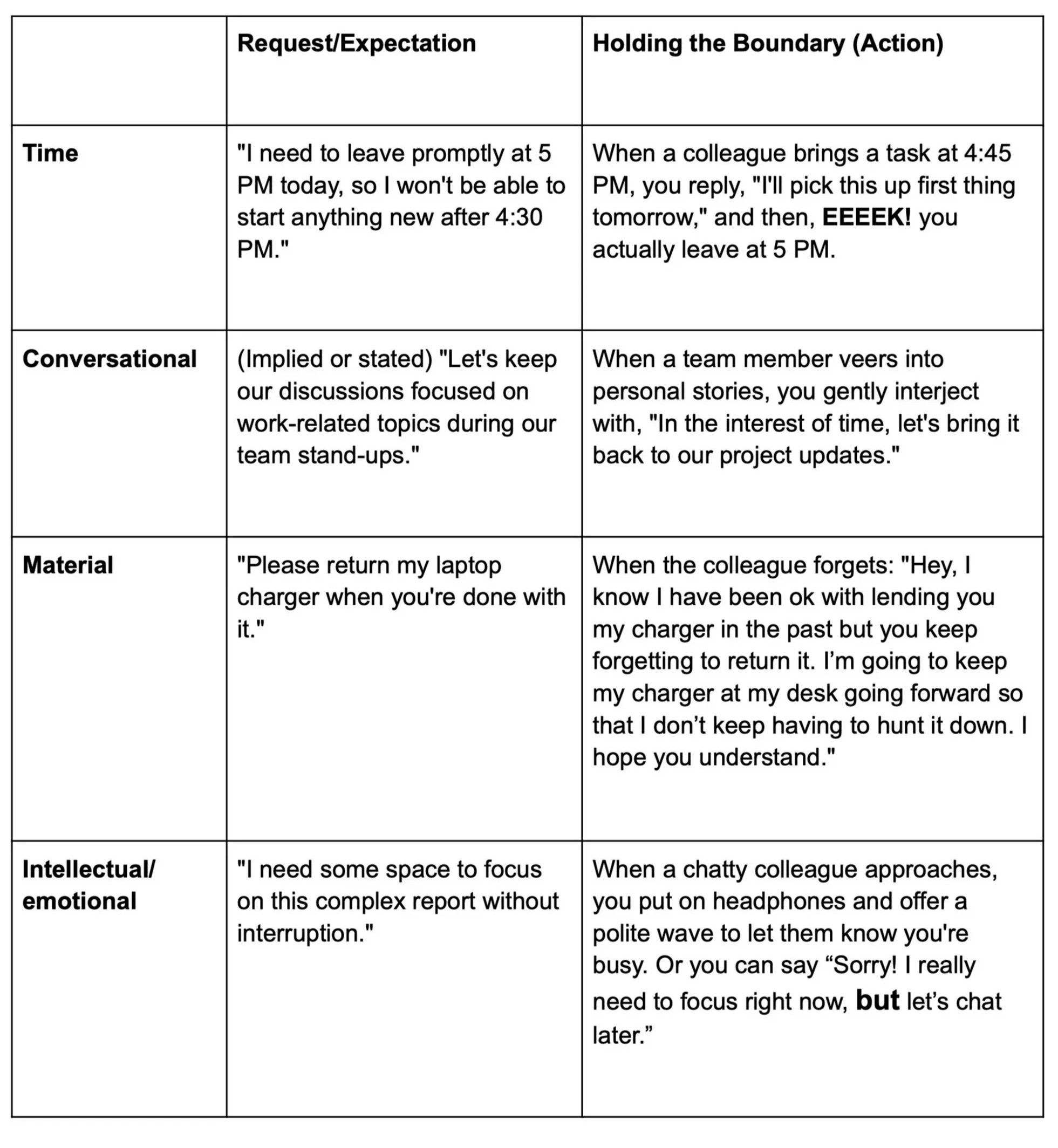
Pro Tip: Only offer a "but/alternative" (e.g., "let's chat later") when that is actually what you want! Not as a way to appease them or manage their discomfort.
Note: Like any new skill, holding a boundary is easier with muscle-memory. It feels clunky and awkward at first, maybe even a little messier than you’d like, but the more you do it, the more natural the 'action' becomes. Keep practicing!
Coming Up Next:
Part 1–3 gave you the tools. Part 4 gives you the "Inner Scaffolding" to use them.
We’ve mastered the requests and the non-verbal actions, but what happens when you actually hold the line and the "Internal Resistance" kicks in? In our final installment, we are going inward to address the invisible barriers that make boundaries feel like a threat rather than a tool.
We’ll dive deep into four internal hurdles that often get in the way:
The Guilt Gap: Why our brains interpret "saying no" as "being unkind," and how to reframe a boundary as an act of integrity rather than a lack of generosity.
The Identity Crisis: For those of us who have built a career on being the "fixer" or the "go-to person," a boundary can feel like we’re losing our value. We’ll discuss how to shift your identity from "The Helper" to "The Leader."
The Fear of Friction: Many high-achievers are secretly conflict-avoidant. We’ll talk about building the emotional boundaries needed to sit with someone else's disappointment without rushing to fix it.
The Safety Response: Understanding why your nervous system might go into "fight, flight, or fawn" mode the moment you hold a boundary, and how to stay grounded in your body while you stay firm in your "no."
It’s time to move from simply setting boundaries to actually living them, without the soul-crushing guilt.
